Smoke Mitigation Network · Nationwide smoke damage testing & claim documentation
Smoke Mitigation logo — a house with rising smoke encircled by a green leaf. Clean air. Healthy spaces. Better lives.
SmokeMitigation.com
Clean air. Healthy spaces. Better lives.
Near a recent fire? Your policy may cover smoke damage.

Smoke damage testing and smoke mitigation services.

For homes, businesses, and standing properties affected by wildfire smoke, nearby fires, soot, ash, smoke odor, or hidden smoke residue. Professional testing documents whether smoke-related contamination is present — and whether insurance-supported mitigation may be available under your policy.

No initial out-of-pocket testing for qualifying insured smoke losses
Accredited laboratory analysis · ANSI/IICRC S700-2025-aligned protocols
We document smoke impact and coordinate claim-support materials
Check your property — free
Takes 60 seconds · A specialist responds within 24 hours
Request received

A testing specialist will contact you within 24 hours to schedule your free on-site assessment. No obligation.

Your situation
{{ sit.label }}
Request my free testing →
{{ formError }}
No cost, no obligation. By submitting you agree to be contacted about smoke testing services. We never sell your information.
PROTOCOLS ALIGNED WITH ANSI/IICRC S700-2025 / S760· ACCREDITED LABORATORY ANALYSIS· LICENSED INDUSTRIAL HYGIENISTS· NATIONWIDE RESPONSE
Infographic thumbnail: smoke damage without a fire — entry paths, residues, testing, insurance
The whole process on one page — how smoke enters, what testing finds
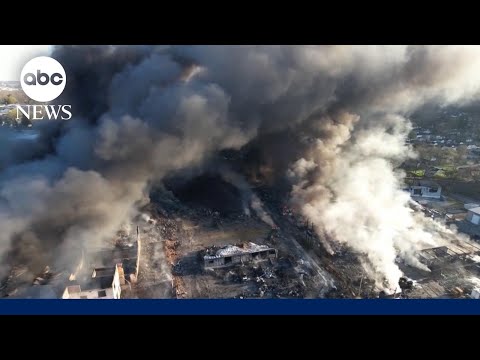
News video thumbnail: EPA warns residents of toxic debris after plastics plant fire
Real events: smoke intrusion in the news
Am I eligible?
Two kinds of owners call us — which one are you? →

From "was I affected?" to a fully documented claim

Three steps, built on testing and documentation rather than visual opinion.

STEP 1
Free on-site testing

A certified specialist collects tape-lift and air samples from your property — attic insulation, HVAC ducting, surfaces. Sent same-day to an accredited laboratory under documented chain of custody.

STEP 2
Laboratory confirmation

The lab quantifies soot, char, ash, and fire VOCs against background levels. If results are elevated, a licensed industrial hygienist writes the remediation protocol — scientific findings, not adjuster opinion.

STEP 3
Insurance-supported remediation

We help document the smoke impact and coordinate claim-support materials with your carrier. Where the claim is approved, professional smoke hygienist services are billed through it — many property policies include fire and smoke coverage.

Two kinds of property owners call us

Most people know to call after a fire in their home. Far fewer realize that smoke from a fire near their property — a neighbor's house, a wildfire miles away — deposits the same soot, char, and VOCs into insulation, ducting, and furnishings. Both situations are testable, and both are typically covered.

Find out which one you are →
Direct fire or smoke damage

Fire touched your property — even a small kitchen or garage fire. Smoke migrates far beyond the burn room; testing establishes the true scope so the claim covers the whole impact, not just the visible damage.

Nearby fire — no flames on your property

A wildfire or structure fire near you filled the air with smoke. Your home looks fine, maybe smells fine — but particles entered and settled. Laboratory testing determines whether contamination exceeds background, at no cost to you.

Why claims succeed
01
Named peril
Standard homeowners, renters, and business policies generally cover fire and smoke damage — flames on your property are not required. Coverage depends on the policy, facts, and documentation.
02
Laboratory evidence
Quantified particle concentrations and VOC indicators from accredited labs, under documented chain of custody.
03
Hygienist authority
A licensed industrial hygienist's protocol defines the remediation scope — science that adjusters can't wave away.

We handle the carrier so you don't have to

Smoke claims fail when they rest on odor complaints and photographs. Ours rest on laboratory data. From first sample to final clearance verification, every step follows documented, standards-aligned procedure — and we prepare the claim-support materials, supplements, and documentation your carrier needs throughout. Licensed adjusters or attorneys handle claim advocacy where required.

You remain responsible only for your policy deductible. If testing shows no elevated contamination, you owe nothing and you'll know your home is clear — that's valuable too.

The whole picture, on one page

How smoke enters, what it leaves behind, where it hides, and how testing and documentation work — save or share it.

Smoke Damage Without a Fire overview infographic: how smoke enters buildings through attic vents, windows and doors, cracks and gaps, HVAC intakes, exhaust fans, and pressure differences; what is in smoke including PM2.5, gases like carbon monoxide and hydrogen cyanide, VOCs such as benzene and formaldehyde, PAHs, aldehydes and phenols, and char and soot; where smoke hides — HVAC systems, attics and crawlspaces, walls and ceilings, carpet and upholstery, contents, and dust; health risks including coughing, asthma attacks, and cardiovascular effects; testing methods overview covering surface sampling, VOC air sampling (TO-15A canister or TO-17 sorbent tube), carbonyl testing (TO-11A), and HVAC and dust sampling; the six-step testing workflow from inspection through recommendations; what you should do — document, limit air infiltration, track odors, get professional help; and insurance and documentation tips including saving photos and communications and requesting testing if a claim is denied.
Smoke damage without a fire: how smoke enters, what it leaves behind, and why testing matters. Click to open full size. © Smoke Mitigation Network

Common questions

{{ item.q }}
{{ item.icon }}
{{ item.a }}

Either way, the answer is worth having.

Whether the result is "elevated" or "all clear," you'll have laboratory documentation about the home your family breathes in — with no initial out-of-pocket testing cost for qualifying insured smoke losses.

Request free testing →